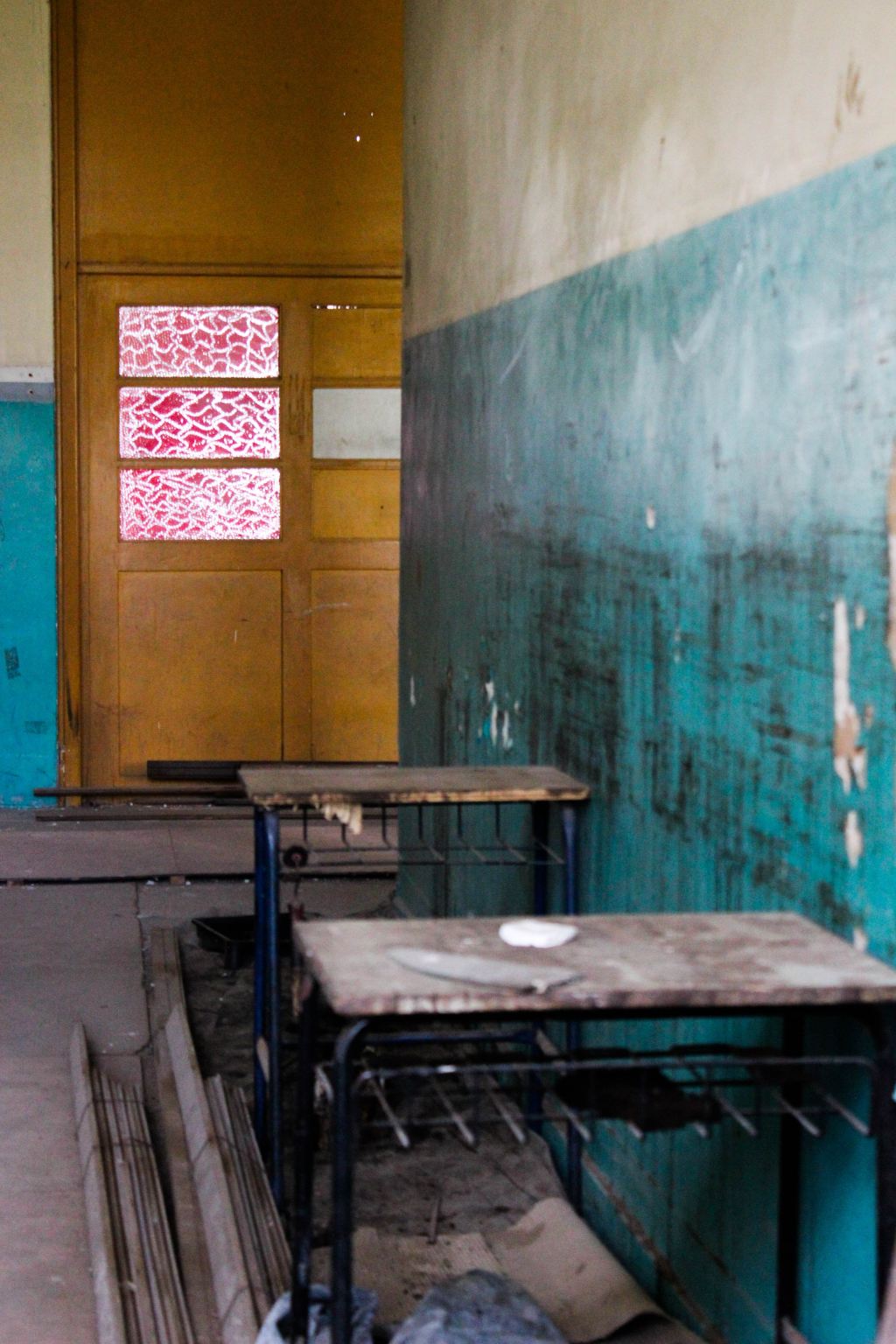
Does money matter for educational achievement? Ferraz et al, reveal that it does. In their research titled Corrupting learning: Evidence from missing federal education funds in Brazil they find “a significant negative correlation between corruption and the school performance of primary school students” (712). The authors study the audits of Brazil’s local governments and observe the flow of funds from the central government to municipalities. To accurately establish the causality between the incidence of corruption at municipalities and the student outcomes on standardized tests, the research controls for “student, school and municipality characteristics” (Ferraz 712). In this memo, I will examine three key aspects – one, the decentralized structure of Brazil’s public education system; two, the unmonitored FUNDEF fund, and three, the underlying conditions that are causing the recurrence of corruption in Brazil’s education system. I will end this memo, with policy recommendations to limit the incidence of corruption, but with caution – indicating how the corrupt agents may still find a way to undermine the policies recommended.

“Brazil’s Federal Constitution guarantees access to free public education at all levels” and “around 60% of corruption cases are linked to the education and health sectors” (“Education in Brazil”; Ferraz et al). These two data points reflect that the cost of public education as a public service to Brazil’s economy is heightened by corruption induced leakages, delivering less than efficient returns. Brazil also runs a decentralized education system, wherein “the constitution dictates that state and municipal governments share the responsibility for the provision of primary and secondary education” but in practice, “most state governments manage secondary schools, while municipal governments manage primary schools” (Ferraz et al 715). Furthermore, according to Brazil’s Constitution, “at least 25% of all state and municipal revenues are spent for educational purposes” but “in the presence of leakages, reported transfers to schools do not translate into school inputs” (Reinikka and Svensson; Baicker and Staiger).
With the aim to universalize basic education, in 1997, Brazil “created temporary funds for the maintenance and development of education with a redistributive objective” called Fund for the Maintenance and Development of the Fundamental Education – FUNDEF, with a need to “rationalize the allocation of public education resources and to redistribute the responsibilities and resources among that states and municipalities (Ranieri 16). However, since its formation it has largely been “left unmonitored” where no government agency has been assigned to “monitor the resources” (Gordon and Vegas; Menezes-Filho and Pazello; “Brazil:Setbacks”). As Ferraz et al explain, the law mandates that 15% of each municipality’s revenue is required to be transferred to a state fund, from where it is “redistributed to municipalities based on the share of primary school students enrolled relative to total state enrollment”. This redistribution of funds may vary across different municipalities in the same state, and as all three tiers of government contribute to this fund, no specific tier is tasked with monitoring. This lack of oversight is a clear indication of why corruption in the education sector in Brazil is rampant.
In light of the evidence presented by Ferraz et al, I am categorizing the corruption-induced leakages into three categories – upstream, midstream and downstream, and recommending policy responses that address leakages at each level. At the upstream level, I find poor governance and monitoring mechanisms, and recommend that a single education fund like FUNDEF observe strict monitoring and evaluation assessment each financial year, wherein the disbursement of funds are controlled by an independent party. Additionally, the disbursement criteria should be changed from school enrollment to student learning outcomes. This will incentivize state and municipalities to invest in inputs that will improve learning outcomes, rather than merely improving school enrollment rates. At the midstream level, I would enforce shared responsibility between the state and the municipalities for both primary and secondary education to ensure that the two are not competing with each other for funds, instead collectively working towards improving student learning and reducing leakages induced by corruption. At the downstream level, I would invest in capacity development of the bureaucrats working at the state and municipality level to reduce inefficiencies, and empower their human agency to impact student learning outcomes, and curb corruption.
However, for these policies to effectively limit the incidence of corruption in Brazil’s education system, they must be institutionalized and enforced concurrently and in alignment with each other. Any top-down supply driven effort must be balanced by a bottom-up demand, in the absence of which, corrupt agents will find unique inroads to maximize returns on corruption through diversion of funds, invoicing and in public procurement – all of which occur at the upstream, midstream and downstream levels, concurrently.
Find the full article with the works cited below.
 The FEM Network