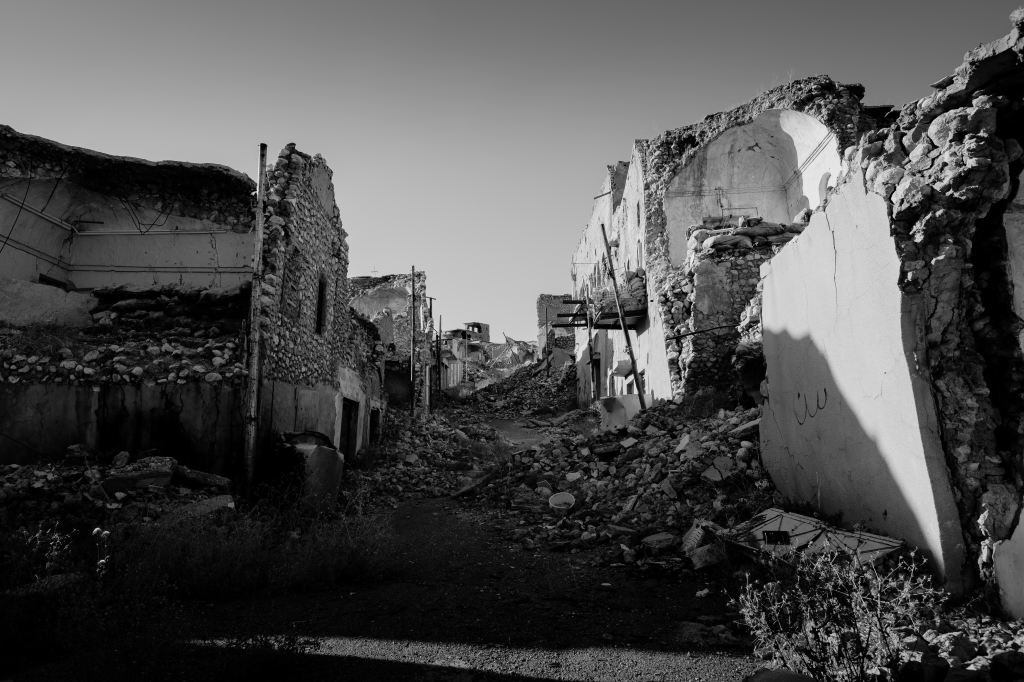
Civil war scholars have come to identify Syria as a turbulent terrain where “ideological, ethnic, tribal, religious, and sectarian narratives seem to be operating at once” (Christia 8). This presents a deeply divisive and volatile battleground where multiple combatants are in force – “a repressed majority versus a dominant minority divide with notable center-periphery tensions” (Fearon 275-301; Buhaug et al 544-569; Fearon and Laitin 75-90). In Syria, a civil war, a religious war and a proxy war – all occupy territories and people (Gilsian). In this essay, I will respond to three crucial questions on the Syrian civil war – first, what led to the civil war in Syria; second, why has the conflict in Syria prolonged and efforts to negotiate peace failed; third, will Syria see stability and peace in the next five years.
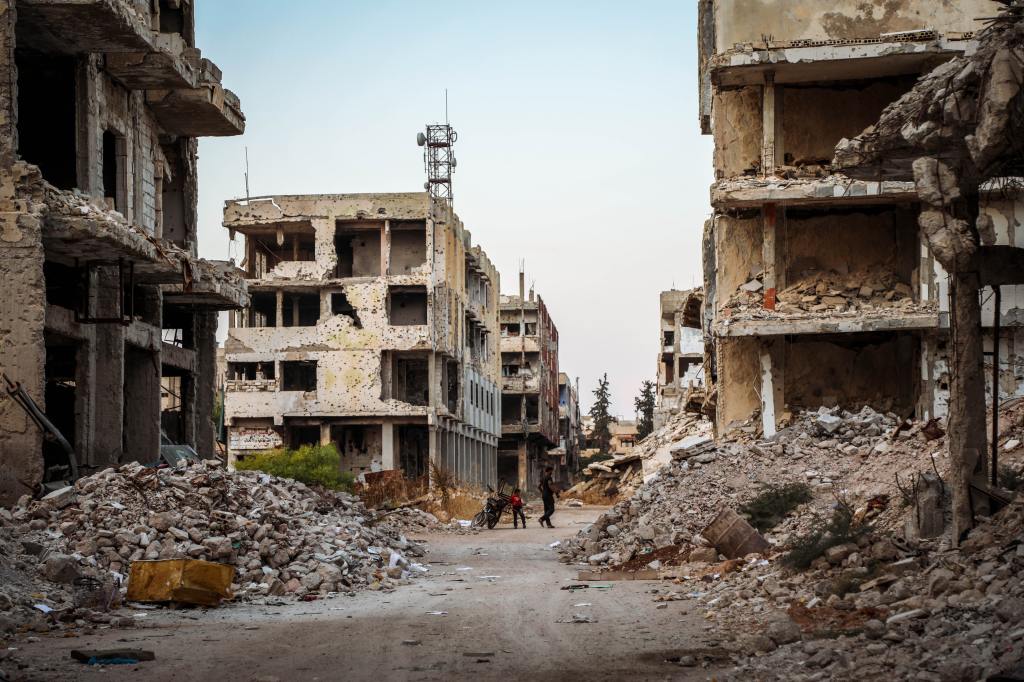
By early 2011, Syria had been suffering from “high unemployment, corruption and a lack of political freedom” (“Syrian war”). At the same time, the Arab Spring – political uprisings that overthrew the governments in Egypt and Tunisia, had been positive signals to pro-democracy groups in Syria to spearhead a similar uprising to oppose the regime in power, and seek greater political control. Fearon explains that “the Arab Spring produced a temporary shock to the relative capabilities of opposition/rebels versus the regime” and led to a “contagion effect” in Syria leading to “popular mobilization and coordination in February and March” of 2011 (15). Further exacerbating the situation, came the arrest, confinement and mistreatment of fifteen teenage boys for spray painting graffiti on a high school wall – acting as the ultimate trigger for the uprising in Syria (Tarabay). These social, economic and political conditions in Syria at the time, tell us that the regime in Syria, led by President Bashar Assad, had been “repressive and ruthless” (Christia 8). In March 2011, peaceful riots began to take hold of Syria and rapidly developed into a mosaic of conflicting insurgency acts, shaping up concurrently.
To understand the conflict in Syria, is to expand one’s understanding of the varied sectarian narratives that exist in the region – deep ethnic divides between the Sunnis; fragmented religious minorities; and the intersectionality between ethnic and religious divides. In Syria, not only is an “aggrieved Sunni majority against the Alawite dominant minority”, the latter being the religious group to which President Asaad belongs, but it is also a civil war that ebbs and flows with the material interests of thugs from both sides of the warring groups that cause “wanton violence” and target civilians (Petersen; Mueller 42-70; Kalyvas and Kocher 183-223). This indiscriminate violence has caused mass displacement of Syrians – as of 2021, nearly twelve million people have been displaced, which accounts for more than half of the country’s prewar population (Laub). Displacement, however, works to the advantage of the regime and as Christia explains, “allows it to separate cooperators from defectors” (9). The conflict in Syria is therefore not binary in nature, where an opposition is rebelling against a government – in fact, the actors within the rebel movement have been estimated to be nearly a thousand by the Institute for the Study of War (qtd. in Christia 9).
Negotiating for peace with that large a number of warring actors can be challenging. The high number of “warring actors translates into more potential veto players” – the groups of stakeholders that need to unanimously agree on a peaceful resolution (Cunningham 875-92; Cunningham). In addition, Stedman points out to the presence of spoilers like the jihadi groups who have “no interest in seeing the conflict come to an end” (5-53). Given this, the conflict in Syria cannot qualify for an insurgency, and President Asaad’s regime cannot be considered, a counterinsurgent. As Kalyvas and Balcells explain, an insurgency only occurs when “a strong government faces a weak opposition” (415-29). What we also know is that the “ruling regime in Syria has been repressive and ruthless” and “its affiliations with Jihadi groups” make it difficult to position the current government as legitimate and effective (Christia 8). What complicates the situation in Syria further is that the war has taken on the character of a proxy war, wherein, as Christia explains, “regional and global rivalries are fought out in a subnational arena” (8). The government is receiving support and foreign assistance from Iran, Lebanon and Russia, whist the opposing rebels are being supported by Saudi Arabia, Turkey, Qatar, and the West. Such financial inflows to both sides, “lead to longer lasting conflicts” (Balch-Lindsay et al 345-63).
While scholars agree that: “both on humanitarian or moral grounds, and due to practical concerns about feasibility and long-run stability” – a negotiated settlement may be necessary, Barbara Walters argues, that the absence of a guarantee that the terms of the negotiated settlement would be upheld is “the critical barrier to civil war settlement” (335-64). Fearon adds that given the Syrian civil war is now a proxy war, there is little possibility for a complete military elimination of either side (13). We can therefore infer that it is the commitment problem, that has led to the prolonged war in Syria and the failure to arrive at a negotiation or settlement.
The possibility of peace and stability in Syria looks dismal, but we cannot stop looking for solutions that would constrain, deter or rein in violence and the indiscriminate killing of civilians. Given that Syria’s war is no longer Syria’s alone, but in fact the proxy war of foreign powers rooting for their respective sides, a natural progression would be to ascertain a neutral intervening actor like the United Nations to not only determine the terms of agreement after liaising with the regime and the rebels, but also, to deploy UN peacekeepers to maintain the terms of agreement and address the commitment problem. Additionally, the United Nations could coalesce foreign powers, to collectively acknowledge the appalling human cost of the war and its rippling effects across the region, and influence an amicable resolve. Finally, while the prospect of a partition can be tempting to explore given the ethnic and religious divides in the country, there is no guarantee that the commitment problem will not make an appearance after the partition. In conclusion, stability and peace may be hard to achieve in the next five years in Syria, but with the intervention of the United Nations, the civilian death toll can be reined in.
The full essay with the works cited can be viewed below.
 The FEM Network